In her new book A Writer’s Britain, Margaret Drabble says,
‘I am one of many who read the landscape through those who wrote about it. Walking in the footsteps of great writers, and seeing landscapes and buildings through their eyes is one of the most enjoyable and sustaining of pleasures.'We know what she means. We Onions are some of the many.
In Britain you can't walk more than a couple of paces without tripping over the stomping ground of a famous writer: ‘Oh look, it’s Toad Hall; it’s Beatrix Potter’s house; it’s Wordsworth’s daffodil garden; we’re in Baker Street; that's the 100 Acre Wood. But you don’t have to go halfway round the world for literary landscapes. Melbourne is brimming with them.
Here are some of our favourites:
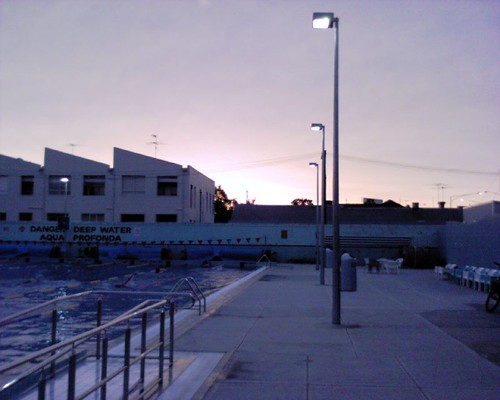
1. Aqua profonda. The beautifully misspelled warning at the deep end of the Fitzroy pool is now heritage listed. The Victorian Heritage Database explains succinctly, if a little clinically: ‘The sign achieved iconic status through its appearance in the 1977 Helen Garner novel Monkey Grip and the subsequent film where the “Aqua Profonda” sign served as a metaphor for the tempestuous relationship of the main protagonists.’ Who among us can walk past a certain ‘old brown house on the corner’ in North Fitzroy without whispering to our companion, ‘That’s the Monkey Grip house’? (Although, who knows if it really is the right one.)
2. St Kilda and the Windsor Hotel. The intrepid, the indefatigable, the elegant, the ideal Phryne Fisher is ever just around the corner about to stride by wearing a cloche hat or roar past in her red Hispano Suiza. Who can stroll down The Esplanade without keeping half an eye out for number 221B, or walk past The Windsor without wondering if Phryne is taking tea.
3. Walkerville. Alison Lester’s Magic Beach is about to celebrate a milestone birthday. For nearly 20 years kids and families have been playing in the sand at Walkerville beach and thinking to themselves, ‘At our beach, at our magic beach we search in the clear warm pools, peering at starfish, limpets and crabs, and tiny fish darting in schools.’